

Investors
Buying Valley land as an investment
Land, rules and resale in three closely watched areas of the Valley. This page is general information, and it isn't investment, tax or legal advice.
The Land Comes First
In these three areas, many buyers are paying for the land and replacing the house.
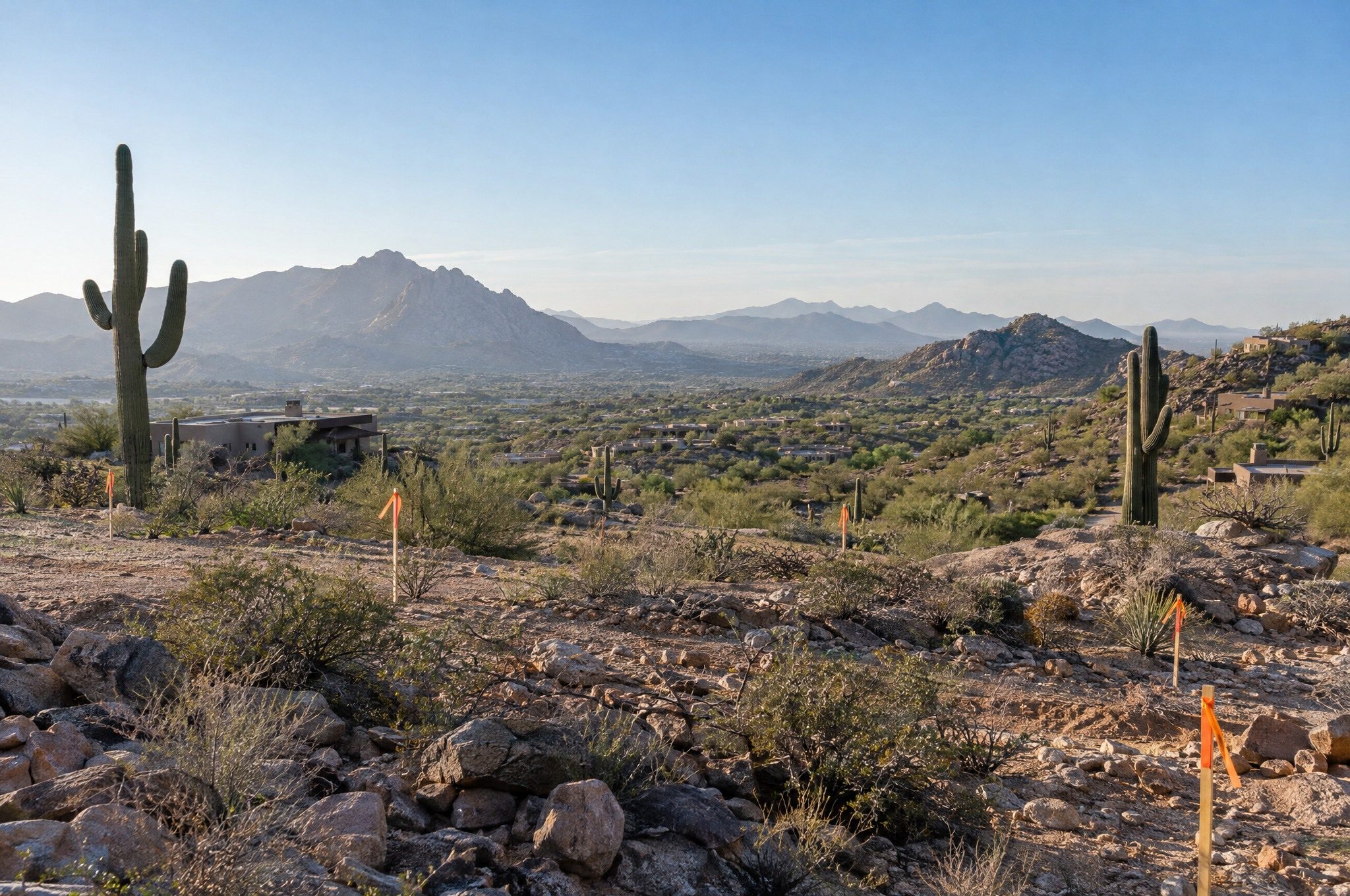
A buyer treating a home as an asset starts with the things nobody can add later: the parcel, its zoning, the view and the street. Paradise Valley's acre lots, Arcadia's old orchard parcels and 85254's established grid each carry a different set of limits, and those limits shape what a parcel can become.
So we read the land before the listing. What can be built, under whose rules? What does the view look like from the finished floor, and what could the neighbor legally build in front of it? Who owns the water lateral, the wash or the easement? Those answers are public or can be found, and they separate two parcels that look alike in photographs.
The wider Valley has its own stories, from the North Scottsdale foothills to the growth corridors farther out. We focus here on the three areas where teardown activity, jurisdiction and scarcity make the parcel-level read matter most.
Rebuild Costs
When you buy a teardown, you're buying the land and paying to demolish the house.
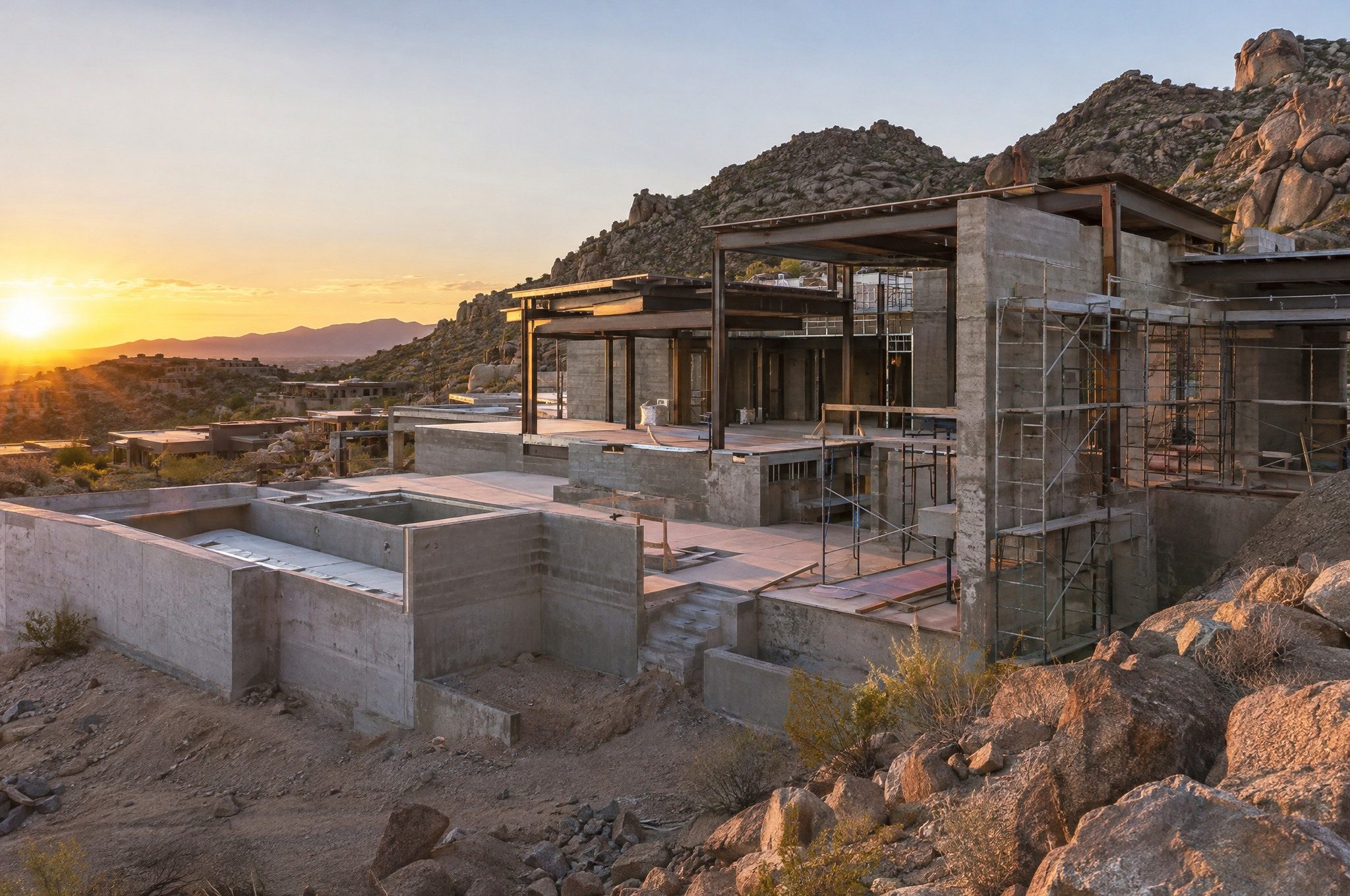
Run a rebuild as one number: acquisition, demolition, design, approvals, construction, carrying costs and the months you'll wait. Then run the finished-home alternative beside it. We set the two side by side because each hides a cost. A finished home carries someone else's choices. A new build carries time, change orders and risk that sit with the owner.
Our own read of the market is that a true luxury custom build across the Valley likely starts around $4M for land and construction together, and around $12M in Paradise Valley. In Paradise Valley, we also see homes from before 2000 as the usual teardown candidates, with new construction on a replaced lot reaching $14M and above. Treat those figures as a description of what's being built. They say nothing about what any one project will cost or be worth.
The rules can change the numbers before work starts. In the Town's R-175 zoning, a lot with a primary building built before June 13, 1991 carries a 40-foot front setback and a lot without one carries 100 feet, so demolition can shrink what you may build. Check what an old house is worth to the zoning before you take it down. Our custom home guide walks through the contracts, the team and the budget in full.
“Check what the old house is worth to the zoning before you take it down.”
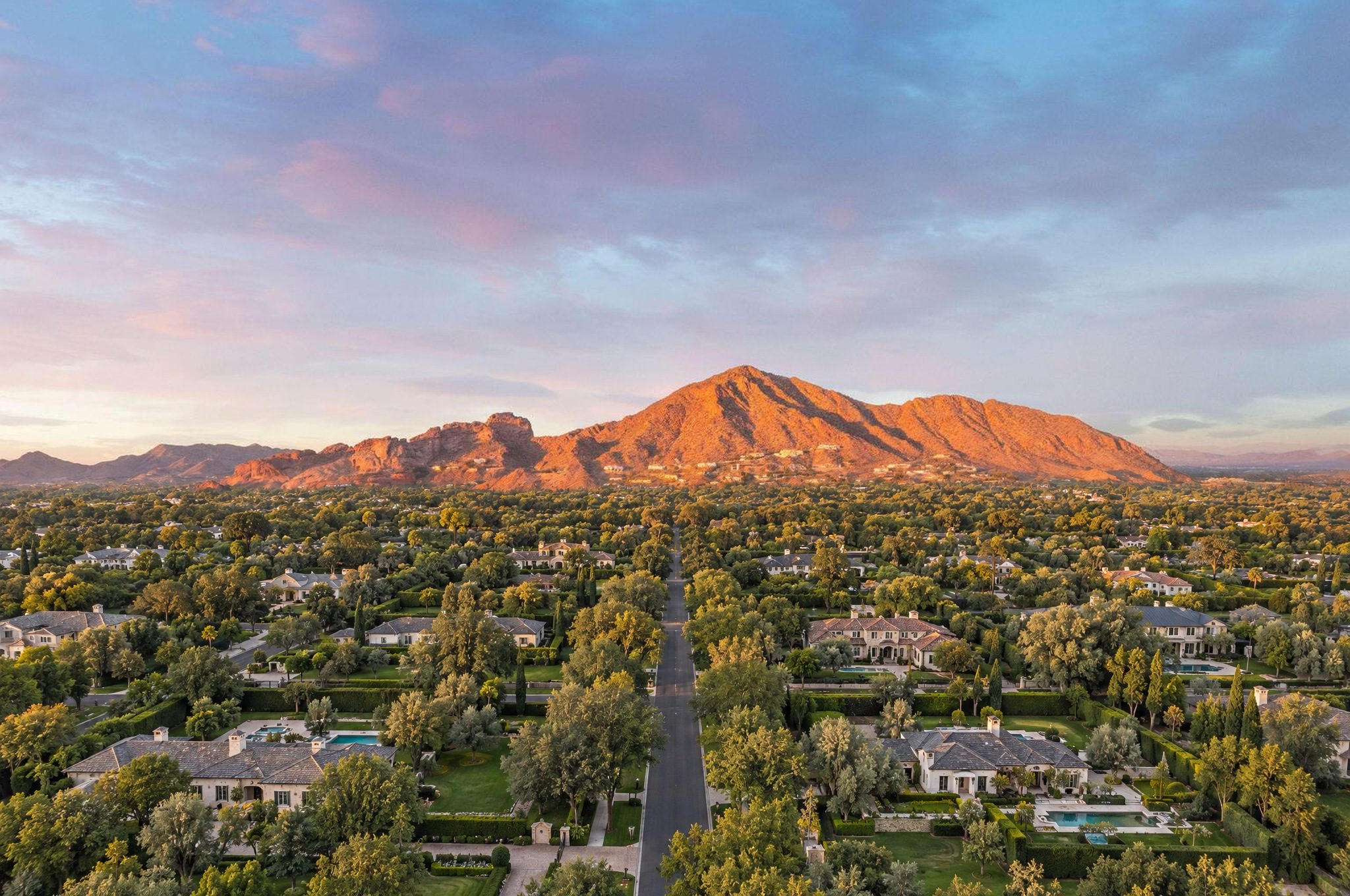
Paradise Valley
The Town's limits on lots and building shape what can be built.
Lots zoned R-175, R-43, R-35, R-35A, R-18 and R-18A are held to a floor area ratio of 25 percent, counting all area under roof, second stories and covered patios included. On a full acre that comes to 10,890 square feet, before setbacks, slope, washes and easements take their share. Fully subterranean space sits outside the calculation, which helps explain the basements in so many new plans.
Height is the second box. On R-43 and R-175 lots, a primary house must meet both a height limit, 24 feet on lots under three acres, and the open space plane the Town's staff calls the imaginary tent. Hillside parcels add their own committee and disturbance limits.
The number that matters is the one left after those subtractions. Two one-acre lots can support very different houses, and we'd want that worked out by the right specialist before any offer rests on it. Remember too that a Paradise Valley mailing address reaches beyond the incorporated Town in places, so confirm which government's rules apply to the parcel.
Arcadia
The word on the listing covers orchard-scale parcels and quarter-acre ranch lots.
Enchant treats Arcadia Lite, Arcadia Proper and Lower Arcadia as separate markets, and we'd price and advise on them that way. The original 1919 plat was laid out for citrus, and later building added ranch houses on lots of about a quarter to a third of an acre beside larger estate parcels. Walk the parcel before you judge it by the name.
Water is the asset most buyers miss. Some parcels have flood irrigation through the Arcadia Water Company or SRP's canals and laterals, and past the delivery gate the upkeep falls to the owners. Confirm active rights, who owns the laterals and how grading moves the water, because a new pool or raised pad can change that flow.
The rebuild pattern here is well established, with restored originals, thorough remodels and large new homes sharing a block. That cuts both ways for an owner. Enchant's read is that the strongest rebuilds respect the setbacks, the canopy and the roofline of the street they join. Confirm the city and zoning on the parcel too, because the 85018 and 85251 addresses don't settle jurisdiction.
85254
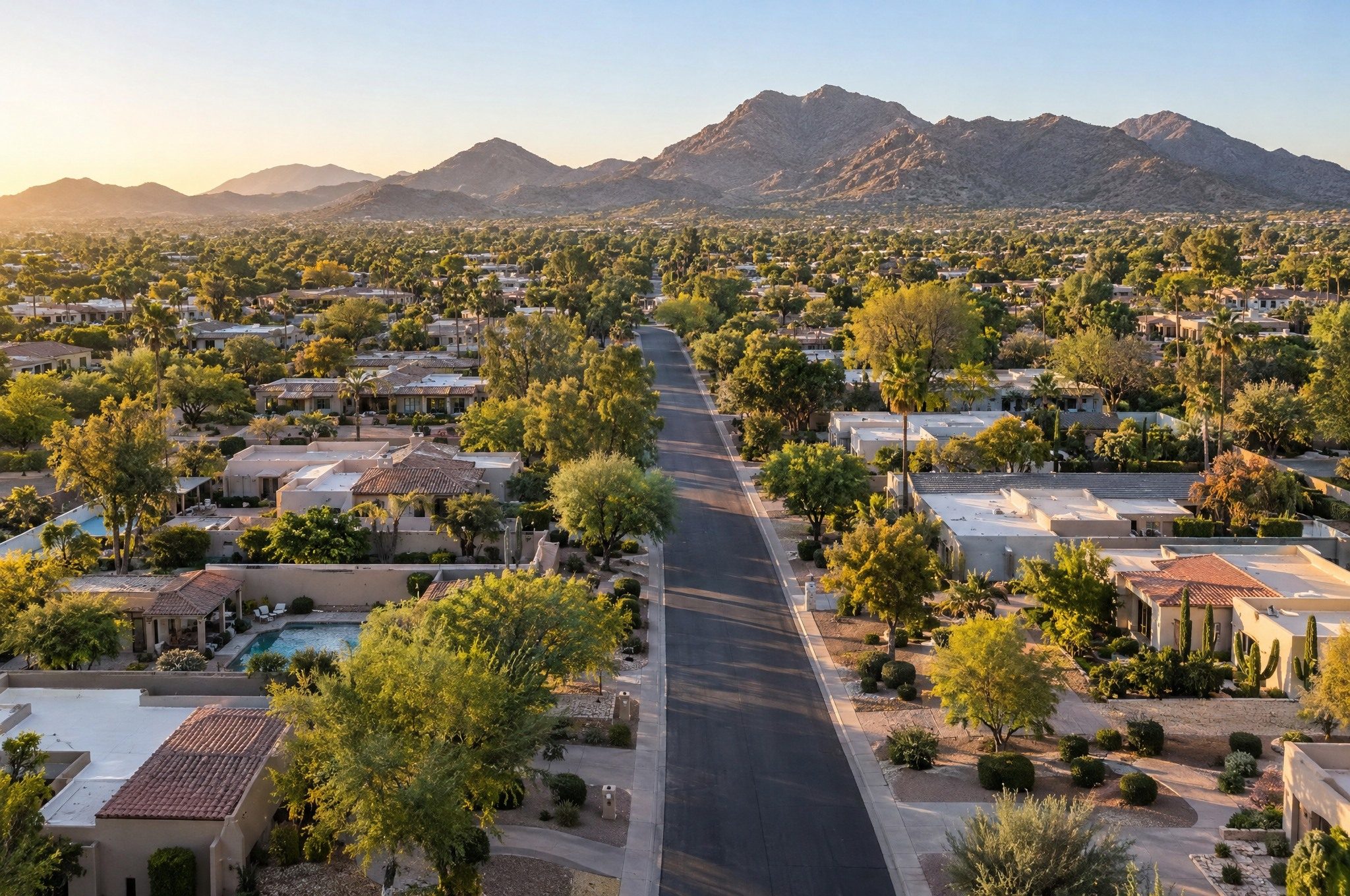
A Scottsdale mailing address can sit inside the City of Phoenix.
The Postal Service gives 85254 a Scottsdale mailing address, and portions of the ZIP lie inside the City of Phoenix. Two houses on nearby streets can have different zoning, permitting, services and short-term rental rules. For an owner running numbers, that's the first fact to pin down.
Enchant's read is that 85254 sits at the Valley's center of gravity, with established single-family streets and direct access to the 101 and SR 51. We're also seeing older homes here rebuilt or taken down to the studs, on lots that didn't draw that kind of attention a generation ago. Some streets have an association and many don't, so read what applies, including older deed restrictions.
Older housing stock deserves a close inspection of the roof, sewer line, plumbing and electrical panel. On a rebuild, those stop mattering. On a hold, they're the budget.
Buying, Holding and Letting Go
Plan how you'll sell before you buy.
Decide what the property is supposed to do for you, and for how long. A home you'll live in for a decade, a lot you'll hold before building and a home you'll rent each ask different questions of the same parcel. We can put the market read in front of you, and your own advisors can put it in the context of your balance sheet.
At the top of the market, comparable sales are thin, so we work from land value, replacement cost, recent rebuilds and the buyers active now, and we give you the reasoning in writing for your CPA or attorney to challenge. Design with the next owner in mind as well: very personal programs narrow the audience later.
Carrying costs are part of the honest picture: taxes, insurance, landscaping, pool, security, association dues and the time a vacant lot or an empty house sits. No one can tell you where prices will go, and we won't try.
If You Plan to Rent It
Arizona limits what a city can do about short-term rentals, and it leaves plenty a city can require.
State law, A.R.S. 9-500.39, says a city or town may not prohibit vacation or short-term rentals, generally stays under 30 days. Cities may require a permit or license at a fee capped at $250, an emergency contact, neighbor notice, permit numbers on advertising and liability coverage of at least $500,000 or an equivalent through the booking platform. On a property with an accessory dwelling unit approved on or after September 14, 2024, a city may require the owner to live on site. Permits can be suspended for repeat verified violations. The rules were checked in November 2026, and the Legislature revisits them often.
In the Town of Paradise Valley, an owner must register the rental with the Town, hold a Town permit and a state transaction privilege tax license, and show county registration where it applies. The Town also states that rentals can't be used for commercial events such as weddings, auctions or fundraisers. In Phoenix, a short-term rental permit has been required since November 6, 2023, with a $250 initial and renewal fee, and the owner must live on site to use an accessory dwelling unit as a short-term rental. In Scottsdale, stays under 30 days require an annual license at $250 per property, with pool barrier requirements for homes with a pool, hot tub or spa.
Association documents are a separate question, so read them before you count on any rental plan. Every residential rental must also be registered with the county assessor under A.R.S. 33-1902. On taxes, cities stopped taxing long-term residential rentals on January 1, 2025, while stays under 30 days remain subject to transaction privilege tax where a city levies it. Confirm the current rules for your specific parcel and jurisdiction before you plan around rental income.
Taxes, Title and the Right Advisors
A few facts to know, and several conversations to have with your own professionals.
Arizona residential property taxes turn on a limited property value that generally can't rise more than five percent a year and can't exceed full cash value. An owner-occupied primary residence falls in class three, and a second home or rental generally falls in class four, both assessed at ten percent. The county assessor can verify residency, so keep the classification accurate. The Town of Paradise Valley levies no primary or secondary property tax of its own, according to its resident guide, though county, school and special district levies still apply and fire service is billed separately.
Bring your CPA and attorney in before you write an offer. Questions about a Section 1031 exchange, holding through an LLC or trust, depreciation, or the tax treatment of a rental belong with them, and the right answer depends on your circumstances.
Title is one of those conversations. As we note on our Paradise Valley page, A.R.S. 33-404 requires trustee deeds to disclose beneficiaries, so a trust alone won't keep a beneficiary's name out of the record. Everything on this page is general information. It isn't investment, tax or legal advice, and we make no prediction about future value or income.

Where Enchant Fits
We cover the parcel and the market, and your advisors cover tax and legal.
We read the parcel for floor area, height, hillside rules, washes and easements, and we tell you which specialist needs to confirm each answer. We lay out buying finished and building new side by side, and we give you the resale reasoning in writing.
Some homes and lots change hands with little public exposure, so we search through direct conversations as well as the MLS, and we approach owners without using your name until you decide otherwise. Any private offering stays within MLS and brokerage rules.
Your attorney, CPA, family office, architect and builder see what you want them to see, when you say so. We represent clients in buying and selling real estate. We don't offer securities, funds or shares in a property, and we don't give investment, tax or legal advice.
What owning here actually involves
Jurisdiction first
Mailing cities mislead in all three areas. Confirm the government that controls zoning, permits and rental rules on the actual parcel.
Buildable area
Work out what the land can support after setbacks, slope, washes and easements, with the right specialist confirming it.
Water and easements
In Arcadia especially, identify irrigation rights, lateral ownership and how grading moves water.
Association documents
Read covenants and older deed restrictions before you plan a rebuild, an addition or a rental.
The tax classification
Know whether the home is primary, second or rental, and keep it accurate with the county assessor.
General information only
Nothing here is investment, tax or legal advice, or a prediction of value or income. Make decisions with your own advisors.
Questions
Do you sell investments?
No. We represent clients buying and selling real estate. We don't offer securities, funds, pooled investments or shares in a property.
Can you tell me what a property will return?
No. We can walk you through the land, the rules, comparable sales and carrying costs. Income and future value depend on things nobody can promise, and your own advisors should test any assumptions.
Can a city ban short-term rentals here?
Under A.R.S. 9-500.39, a city or town can't prohibit them, though it can require permits and enforce many conditions. Association documents are a separate matter. The rules can change, so confirm them for the specific parcel.
Is a Paradise Valley address always in the Town?
No. Some homes with a Paradise Valley address sit outside the incorporated Town, and that affects which rules apply. Confirm jurisdiction parcel by parcel.
Should I hold through an LLC or trust?
That's a question for your attorney and CPA. We raise it early so the entity, signatures and funds are ready before an offer, and we'd note that Arizona requires trustee deeds to disclose beneficiaries.

Start with a parcel
Send us an address or a parcel number in Paradise Valley, Arcadia or 85254. We'll read the land and the rules with you, and tell you which of your advisors should weigh in first.
Sources
- A.R.S. 9-500.39, vacation and short-term rentals
- A.R.S. 33-1902, residential rental registration
- A.R.S. 42-13301, limited property value
- A.R.S. 42-12003, class three property
- A.R.S. 42-12004, class four property
- A.R.S. 42-15003, class three assessment ratio
- A.R.S. 42-15004, class four assessment ratio
- A.R.S. 42-12053, primary, secondary and rental criteria
- Maricopa County Assessor, legal class questions
- Town of Paradise Valley, apply for a short-term rental permit
- Town of Paradise Valley, things to keep in mind before you rent
- City of Phoenix, short-term rental permit
- City of Scottsdale, information for owners and operators
- Arizona Department of Revenue, short-term and long-term rental tax
- National Law Review, Arizona residential rental tax changes effective January 1, 2025
- A.R.S. 33-404, disclosure of beneficiary